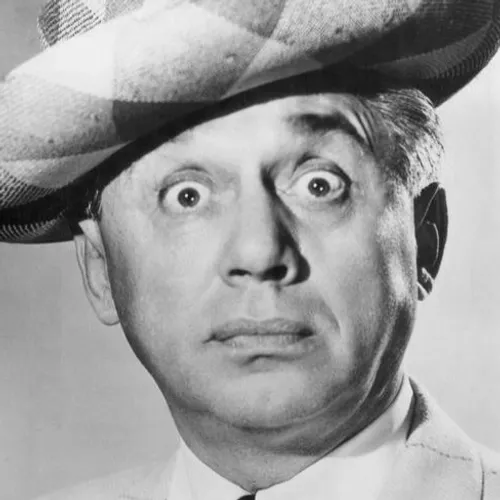
Ole Olsen
In the vibrant landscape of early 20th-century entertainment, few performers captured the spirit of comedy quite like Ole Olsen. A master of vaudeville and radio, Olsen carved out a unique place in American entertainment history through his innovative comedic approach and dynamic partnership with Chick Johnson. His career spanned multiple decades, bridging the worlds of stage, radio, and screen with remarkable versatility and humor.
The Early Years of a Comedic Pioneer
Born John Sigvard Olsen on November 6, 1892, in Peru, Indiana, Ole emerged from the heartland of America with dreams of entertainment. Growing up in an era of rapid cultural transformation, Olsen was perfectly positioned to become a pioneering comedian. His early years were marked by an innate sense of humor and a desire to make people laugh, traits that would define his entire professional career. The young Olsen quickly discovered his passion for performance, developing the comedic skills that would later make him a household name. His natural timing and ability to connect with audiences set him apart from his contemporaries, hinting at the remarkable career that lay ahead.
The Birth of a Legendary Comedy Team
In 1914, Olsen formed what would become one of the most iconic comedy duos in entertainment history: Olsen and Johnson. Partnering with Chick Johnson, the team began their journey in vaudeville, quickly gaining recognition for their unique and often chaotic comedic style. Their screen debut came in 1930 with the film Oh, Sailor Behave, marking the beginning of their broader entertainment career. The comedy team's breakthrough came with their radio debut on the Rudy Vallee Fleischman Show for NBC-Radio in 1932. They soon starred in their own CBS-Radio program from 1933 to 1934, solidifying their reputation as radio comedy innovators. Their most significant theatrical achievement came in 1939 with the Broadway play Hellzapoppin, which they both produced and starred in, later adapting it into a successful film in 1941.
Radio and Television: Expanding the Comedy Frontier
Olsen and Johnson were not content to remain confined to a single medium. They became frequent guests on television programs, appearing on shows like Fireball Fun-For-All on NBC in 1949 and All Star Revue from 1950 to 1953. Their ability to adapt to new entertainment technologies demonstrated their remarkable versatility and enduring appeal. Their radio performances were characterized by a wild, improvisational style that broke traditional comedic boundaries. They were known for their unpredictable humor and ability to engage audiences across different platforms, making them true pioneers of comedy.
Personal Life and Legacy
Despite his professional success, Olsen's personal life was complex. He was married twice, first to Lillian Clem, with whom he had four children, and later to Eileen Maria Osthoff in 1961. Tragedy touched his family, with son J.C. Olsen dying by suicide in 1956 and another son Robert Clem passing away at a young age. Ole Olsen is remembered not just for his comedy, but for his philosophical approach to life. His famous quote, "May you live as long as you laugh, and laugh as long as you live," is etched on his headstone, serving as a testament to his comedic spirit. He passed away on January 26, 1963, in Albuquerque, New Mexico, leaving behind a rich legacy of laughter.
Works and Appearances
Radio
- Rudy Vallee Fleischman Show (NBC, 1932)
- Olsen and Johnson CBS Radio Program (1933-1934)
- Treasury Star Parade (Multiple episodes)
Stage
- Hellzapoppin (Broadway, 1939)
Film
- Oh, Sailor Behave (1930)
- Hellzapoppin (1941)
Television
- Fireball Fun-For-All (NBC, 1949)
- All Star Revue (NBC, 1950-1953)
Ole Olsen's career represents a golden era of American comedy, bridging vaudeville, radio, film, and television with unparalleled creativity and humor.