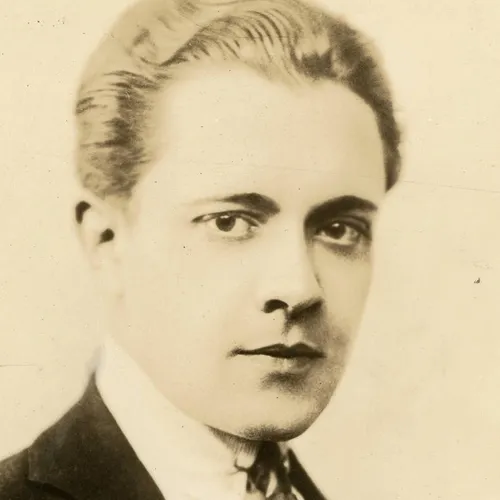
Niles Welch
Niles Eugene Welch was a versatile performer who seamlessly transitioned between stage, silent film, and the emerging world of radio broadcasting during the early 20th century. His remarkable career spanned multiple media platforms, with a particularly notable contribution to radio broadcasting during the late 1930s and early 1940s.
Early Life and Theatrical Beginnings
Born on July 29, 1888, in Hartford, Connecticut, Niles Welch emerged from a privileged background, having graduated from St. Paul's School. His early professional journey began in the theatrical world, where he spent four years performing on the legitimate stage before venturing into the nascent film industry. After touring the United States with a stock company, Welch made his initial foray into entertainment, demonstrating a versatility that would characterize his entire career.
Transition to Silent and Talking Pictures
Welch's film career was prolific, featuring in numerous productions during the silent and early talking picture eras. He appeared alongside prominent actors of his time, including roles in films like The Courage of Marge O'Doone and a groundbreaking 1917 feature that was the first film produced in two-strip Technicolor. His filmography is extensive, with credits spanning from 1913 to 1940, though his roles became increasingly smaller as the sound era progressed.
Radio Broadcasting and World War II Contributions
Perhaps most fascinating was Welch's radio career, particularly during World War II. In 1939, he served as the announcer for Columbia's American School of the Air on CBS radio. During the war, he made a significant contribution by conducting foreign-language broadcasts for the Voice of America (VOA), leveraging his fluency in French and German. His dedication was remarkable, participating in daily short-wave broadcasts to Europe and even hosting his own program.
Personal Challenges and Later Life
Tragedy struck in 1945 when a door at the VOA studio in New York caused a serious injury, detaching both of Welch's retinas. This incident led to him losing sight in one eye and having partial vision in the other for a year, ultimately resulting in total blindness. Despite this significant personal challenge, Welch had already established himself as a respected performer across multiple media platforms.
Legacy and Remembrance
Niles Welch's career exemplified the adaptability required of performers during the early 20th century's rapidly evolving entertainment landscape. From stage to silent films, talking pictures to radio broadcasting, he demonstrated remarkable versatility. His work during World War II, particularly his multilingual broadcasts, represented a unique contribution to wartime communication efforts. Welch passed away on November 21, 1976, in Laguna Niguel, California, leaving behind a diverse and impressive body of work.
Works and Appearances
Radio
- Columbia's American School of the Air (CBS, 1939) - Announcer
- Voice of America (1939-1945) - Foreign Language Broadcaster
- Daily short-wave broadcasts to Europe
- Personal program host
Film
- The Stranger in Grey (First film, year unspecified)
- Stepping Out (Early production)
- The Cup of Life (Early production)
- Miss George Washington
- The Courage of Marge O'Doone
- Numerous silent and talking pictures from 1913-1940 (over 100 film credits)
Stage
- The Donovan Affair (Broadway, 1926) - Role of David Cornish
Notable Achievements
- First feature film in two-strip Technicolor (1917)
- Multilingual broadcaster during World War II
- Performer across silent film, talking pictures, radio, and stage