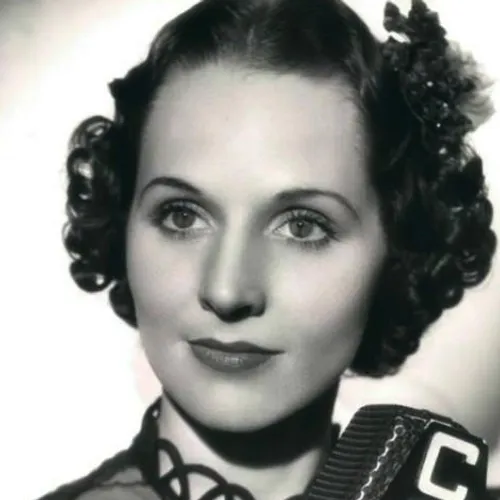
Nadine Conner
An American operatic soprano, radio singer and music teacher, she was born in Compton, California as Evelyn Nadine Henderson, and was the descendent of some of the earliest non-Hispanic settlers in California.
In the golden age of radio and classical music, few performers could match the versatility and talent of Nadine Conner. Born Evelyn Nadine Henderson in 1907, she would become a celebrated soprano who seamlessly transitioned from radio microphones to opera stages, leaving an indelible mark on American musical performance.
Early Harmonies: A Musical Family Legacy
The roots of Nadine Conner's musical journey began on a farm outside Los Angeles, where she was born into a remarkably musical family. With six siblings, all seven children were singers, and her parents even built their own theater, staging various shows. A pivotal moment in her early life came when, as a teenager diagnosed with pulmonary disease, her doctor recommended classical singing to strengthen her lungs. Following medical advice, Conner began studying privately with Amado Fernandez, a Hollywood-based tenor during her high school years. What started as a health recommendation unexpectedly revealed her extraordinary vocal potential. She continued her musical education more seriously with Horatio Cogswell and later studied in New York City, laying the groundwork for her future career.
Radio Waves and Musical Beginnings
Conner's professional journey began in the vibrant world of 1930s radio. Her radio debut in 1933 came after successfully passing an audition for California Melodies. She quickly became a featured singer, appearing on various programs and performing alongside prominent stars. Her radio career was marked by diverse performances, including roles in Showboat and collaborations with notable musical talents. By the end of 1939, Conner was ready to expand her musical horizons. Adopting the stage name Olga Bagdonova, she sang with a Russian musical group for over a year and a half, demonstrating her linguistic and performative versatility.
The Operatic Triumph
Conner's transition to opera was as remarkable as her radio career. In 1940, she made her professional debut as Marguerite in a Los Angeles production, and by 1941, she had begun her illustrious career at the Metropolitan Opera. Her debut as Pamina in The Magic Flute marked the beginning of a distinguished operatic journey. Her performances were celebrated for their exceptional quality. She excelled in Mozart's repertoire and garnered particular acclaim for her interpretations of Mimi in La Bohème and a thrilling Violetta in La Traviata. Comfortable in both lyric and coloratura roles, Conner performed an impressive 249 times at the Met before retiring in 1960.
Personal Life and Legacy
Beyond her musical achievements, Nadine Conner led a rich personal life. She was married twice, first to a classmate whose surname she adopted professionally, and later to Dr. Laurance Heacock, a surgeon. Together, they had two children, Sue Lynn and Loren, and eventually settled in a location where she continued to teach singing. Conner passed away on March 1, 2003, at the age of 96, leaving behind a legacy of musical excellence. She recorded with multiple labels including CBS, Cetra, and Melodram, ensuring her performances would be remembered by future generations.
Works and Appearances
Radio
- California Melodies (1933)
- Showboat (Various years)
- Multiple unnamed radio programs featuring musical performances
Opera
- Metropolitan Opera (1941-1960)
- 249 total performances
Recordings
- Recorded with CBS, Cetra, Melodram, Discocorp, and Camden
Advertising
- Camel Cigarette Commercials (1949)
- Print advertisements in magazines like Life
Nadine Conner's journey from a farm in California to the prestigious stages of the Metropolitan Opera represents a quintessential American success story of talent, perseverance, and artistic transformation.