Myrtle Vail
In the vibrant landscape of early 20th-century entertainment, Myrtle Vail emerged as a remarkable performer who seamlessly bridged vaudeville, radio, and film. Her most enduring legacy would be the groundbreaking radio show Myrt and Marge, which captivated audiences during the Great Depression and established her as a creative force in broadcasting.
Early Beginnings and Vaudeville Roots
Born on January 7, 1888, in Joliet, Illinois, Myrtle Vail displayed an adventurous spirit from a young age. At just 15, she left her hometown to pursue a career in entertainment, a bold move for a young woman in the early 20th century. Her passion for performance led her to vaudeville, where she and her husband George Damerel developed a family act that toured extensively during the 1910s and 1920s. The family's professional journey was not without challenges. When their investments were decimated by the 1929 economic crash, Vail demonstrated remarkable resilience by pivoting her career toward radio. This economic setback would ultimately become a transformative moment in her professional life.
The Birth of Myrt and Marge
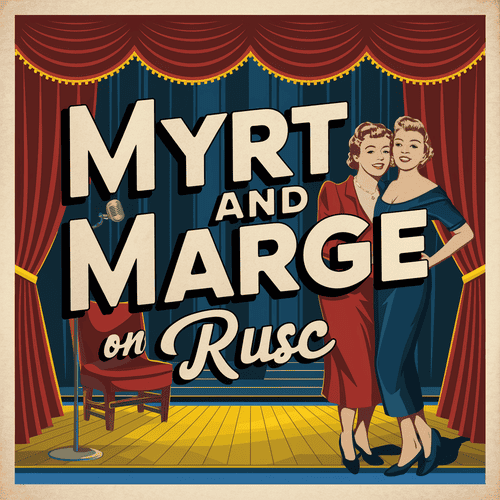
Vail's most significant contribution to entertainment came with the creation of Myrt and Marge, a radio show she conceptualized based on her own experiences in show business. The program, which debuted in 1932, was a groundbreaking narrative that followed the lives of two chorus girls. Vail ingeniously cast herself as Myrt, the experienced performer, and her real-life daughter as Marge, the innocent newcomer. The show's unique premise resonated with audiences. Wrigley, the sponsor, was immediately taken with Vail's concept, and Myrt and Marge quickly became a popular radio program. In 1933, Vail faced a significant personal challenge when a serious automobile accident forced her to temporarily hand over the show's writing to a colleague.
Navigating Radio's Changing Landscape
Despite the show's initial success, Vail experienced the volatile nature of radio entertainment. When Myrt and Marge concluded in 1942, she attempted to recreate its magic with Myrt, Ltd., which unfortunately did not achieve the same success. In 1946, she made a final attempt by creating a transcribed version of the original show using refurbished scripts, but it too failed to capture audience attention.
Transition to Film and Later Career
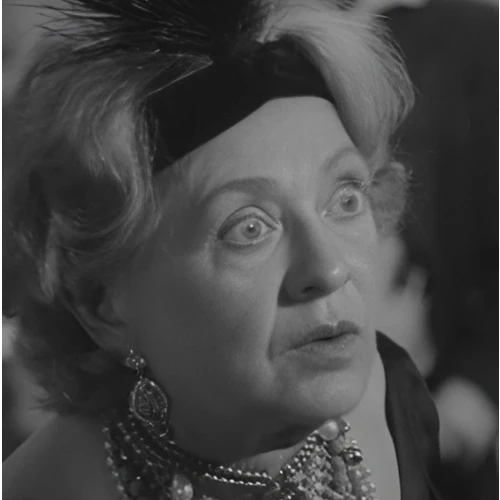
After her radio career waned, Vail reinvented herself as a character actress in low-budget films. She became particularly notable for her roles in Roger Corman's productions, including A Bucket of Blood (1959) and The Little Shop of Horrors (1960), both written by her grandson, Charles B. Griffith. Her appearance on television's Matinee Theatre in 1960 further demonstrated her adaptability as a performer.
Legacy and Personal Life
Myrtle Vail's career spanned an impressive six decades, from 1903 to 1964. She never remarried after her husband's death in 1936 and remained a dedicated performer and creative artist. Her legacy is preserved through approximately fifty surviving episodes of Myrt and Marge, which continue to offer insights into the golden age of radio. Vail passed away on September 18, 1978, in Kansas City, Missouri, at the age of 90, leaving behind a rich legacy of entertainment innovation.
Works and Appearances
Radio
- Myrt and Marge (1932-1942) - Creator, Writer, Lead Actress
- Myrt, Ltd. (1942) - Creator
- Transcribed Myrt and Marge (1946) - Creator
Film
- A Bucket of Blood (1959) - Supporting Role
- The Little Shop of Horrors (1960) - Supporting Role
Television
- Matinee Theatre (1960) - Guest Appearance
Stage
- Various Vaudeville Performances (1910s-1920s)