Mischa Auer
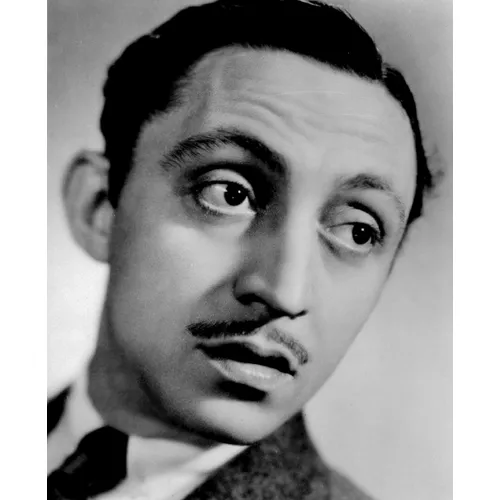
Mischa Auer was a remarkable Russian-American actor whose vibrant personality and distinctive comedic talents made him a memorable figure in Hollywood's Golden Age. Though primarily known for his film work, Auer's brief but memorable foray into radio broadcasting showcased his remarkable versatility and comic timing.
Early Life and Theatrical Roots
Born Mikhail Semyonovich Unkovsky on November 17, 1905, in St. Petersburg, Russia, Auer emerged from a fascinating family background. His father was a naval officer, and his mother was the daughter of Leopold Auer, a renowned Hungarian-born violinist. The tumultuous Russian Revolution would dramatically alter young Mischa's life trajectory. After a challenging childhood marked by separation from his mother, Auer was brought to the United States by his grandfather in August 1920. His early years were characterized by uncertainty and adaptation, experiences that would later inform his nuanced performances.
Entry into Performance and Hollywood
Auer began his performing career on stage in the 1920s, quickly transitioning to film. His first movie appearance came in 1928, and he soon became known for his ability to portray eccentric, often comedic characters. His breakthrough came in 1936 with the comedy My Man Godfrey, for which he received an Academy Award nomination. His unique comic style—characterized by exaggerated expressions and a distinctive Russian accent—made him a sought-after character actor. As he himself noted, "That one role made a comic out of me," referring to his My Man Godfrey performance.
Radio Career and Comedy Series
In the summer of 1942, Auer starred in a groundbreaking CBS radio comedy series, Mischa, the Magnificent. This innovative program allowed Auer to showcase his comedic talents in a new medium. Each episode featured Auer's character dictating memoirs of his fictional "golden youth," exploring humorous scenarios ranging from his supposed experiences as a "great lover" to a "famed opera singer." The show was notable for its unique premise and Auer's charismatic performance. His character's catchphrase, "Greetings, my little cabbage," became a memorable aspect of the series. The program's theme song, "The Song of the Volga Boatman," further emphasized Auer's Russian heritage. Beyond his own series, Auer was a popular guest on various radio programs. He appeared on prestigious shows like Lux Radio Theatre, The Charlie McCarthy Show, and The Pepsodent Show, demonstrating his versatility and broad appeal.
Later Career and Legacy
As Hollywood evolved, so did Auer's career. He continued acting in films throughout the 1940s and 1950s, working in Hollywood, France, and Italy. His filmography includes memorable roles in classics like You Can't Take It with You and Destry Rides Again. Auer's legacy is that of a consummate character actor who brought humor, humanity, and a unique perspective to his performances. His ability to transition between stage, film, and radio exemplified the versatility of performers during Hollywood's Golden Age.
Conclusion
Mischa Auer was more than just a comedic actor; he was a cultural bridge, using his Russian background and extraordinary comic talents to entertain audiences across multiple mediums. His radio work, though brief, remains a fascinating chapter in his remarkable career.
Works and Appearances
Radio
- Mischa, the Magnificent (1942) - Lead role, self-titled comedy series
- Lux Radio Theatre - Guest performer
- The Charlie McCarthy Show - Guest appearance
- The Pepsodent Show - Featured performer
- Roma Wines Show (1943) - Guest performer
Film
- My Man Godfrey (1936) - Carlo (Academy Award nomination)
- You Can't Take It with You (1938) - Potap Kolenkhov
- Destry Rides Again (1939) - Boris Callahan
- And Then There Were None (1945) - Prince Nikita Starloff
Television
- Various episodic appearances in the 1950s
Theater
- Stage performances in the 1920s (specific productions not detailed in available sources)