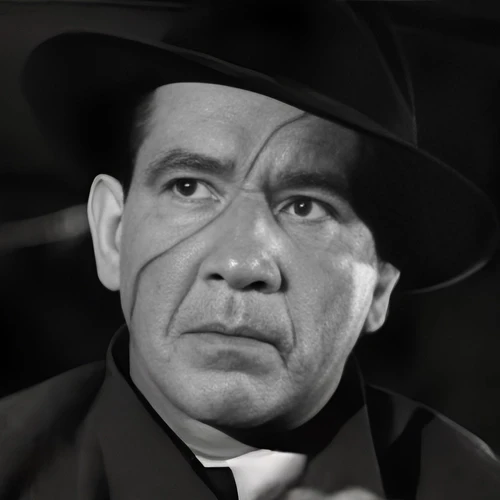
Mike Mazurki
Mike Mazurki was a larger-than-life performer whose towering presence and distinctive voice made him a memorable figure in mid-20th century entertainment. Born Markiian Yulianovych Mazurkevych in 1907 in Ukraine, Mazurki would become a quintessential character actor whose career spanned multiple media, leaving an indelible mark on American popular culture.
Early Life and Unexpected Beginnings
Growing up in a world far removed from Hollywood, Mazurki's journey to entertainment was anything but typical. Born in the village of Kupchyntsi in Austria-Hungary (now Ukraine), he arrived in the United States with dreams that initially centered on law, not performance. After graduating from Manhattan College with a Bachelor of Arts degree in 1930, Mazurki pursued legal studies and became an attorney. However, the legal profession proved less lucrative than his physical talents. Mazurki discovered he could earn substantially more as a professional wrestler, a career that would ultimately serve as a springboard into acting. His imposing physique—standing 6 feet 5 inches tall—and powerful presence made him a natural fit for roles that demanded physical intimidation.
Transition to Entertainment
Mazurki's entry into acting was serendipitous. After working as a professional wrestler, he transitioned to entertainment by serving as a bodyguard and being discovered by a filmmaker. His first film appearance came in 1941, marking the beginning of a prolific career that would see him appear in over 142 films. His breakthrough came with memorable roles that capitalized on his imposing physical presence. In Murder, My Sweet (1944), he portrayed Moose Malloy, a slow-witted but dangerous thug that would become one of his most iconic characters. He followed this with equally memorable performances as Splitface in Dick Tracy (1945) and The Strangler in Night and the City (1950).
Radio and Multimedia Career
While primarily known for film work, Mazurki was also a notable radio performer. He appeared in prestigious anthology series like Lux Radio Theatre, often reprising his film roles. On June 11, 1945, he recreated his Moose Malloy character from Murder, My Sweet, demonstrating his ability to translate screen performances to audio mediums. His television career was equally diverse. Mazurki made guest appearances on numerous popular shows, including Perry Mason, Bonanza, Gunsmoke, and Charlie's Angels. In 1966-67, he even portrayed a caveman named Clon in the series It's About Time.
Legacy and Later Years
Despite being typecast as tough guys and thugs, Mazurki brought nuance and humanity to his characters. His distinctive croaking voice and craggy features made him instantly recognizable. In 1972, he achieved his only starring film role in Trapper, a testament to his enduring appeal. Mazurki continued working until shortly before his death on December 9, 1990. His final film role was in a low-budget comedy released just two months before he passed away. Interestingly, he claimed to have gained more fame from appearing in a Pat Benatar music video in 1984 than from many of his film and television roles.
Conclusion
Mike Mazurki was more than just a character actor—he was a cultural icon who bridged multiple entertainment mediums. From wrestling to film, radio to television, he carved a unique path that celebrated his distinctive physical and vocal characteristics. His legacy extends beyond his roles, representing a quintessential era of American entertainment.
Works and Appearances
Radio
- Lux Radio Theatre: "Murder, My Sweet" (June 11, 1945)
- Hollywood Star Time: "Murder, My Sweet" (June 8, 1948)
- Johnny Fletcher Mystery: "Navy Colt" (1946)
Film
- Murder, My Sweet (1944) as Moose Malloy
- Dick Tracy (1945) as Splitface
- Night and the City (1950) as The Strangler
- Trapper (1972) - Starring Role
Television
- Perry Mason (Multiple Episodes)
- Bonanza (Multiple Episodes)
- Gunsmoke (1971)
- Charlie's Angels (1978)
- It's About Time (1966-1967) as Clon
Music Video
- Pat Benatar "Love Is a Battlefield" (1984)
