Mike Kellin
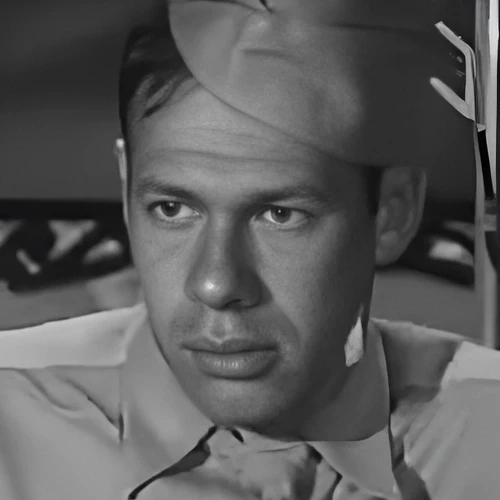
Mike Kellin was a dynamic and prolific actor whose distinctive voice and rugged persona made him a memorable presence across radio, television, and stage during the golden age of American entertainment. With his coarse-featured face and tired eyes, Kellin embodied the quintessential tough guy character that defined much of mid-20th century dramatic storytelling.
Early Life and Theatrical Roots
Born Myron Kellin on April 26, 1922, in Hartford, Connecticut, Mike emerged from a family of Jewish immigrants. His early life was marked by academic pursuit and military service, providing a solid foundation for his future artistic career. After completing his education at Boston University and Trinity College, Kellin served as a lieutenant commander in the Navy during World War II . This experience likely contributed to the depth and authenticity he would later bring to his performances. Following his military service, Kellin pursued his passion for acting, studying at Yale University where he honed his craft in acting and playwriting. His dedication to the theatrical arts would soon translate into a remarkable career that spanned multiple mediums.
Breaking into Radio and Stage
Kellin made his Broadway debut in 1949 with At War with the Army, a production that would also become his screen debut alongside Dean Martin and Jerry Lewis . His talent quickly became apparent, and he worked prolifically, appearing in approximately 50 plays throughout his career. His performances were not just numerous but critically acclaimed, earning him an Obie Award for his work in American Buffalo and a Tony Award nomination in 1956 for Pipe Dream . In the world of radio, Kellin was a notable presence. He appeared in the CBS Radio Mystery Theater, including a memorable episode titled The Hit Man in 1974 . His radio work demonstrated his versatility and ability to bring characters to life through voice alone.
Television and Film Career
Kellin's career expanded beyond stage and radio into television and film. He became a familiar face on television, with regular roles in series like The Wackiest Ship in the Army (1965-1966), where he played Chief Petty Officer Willie Miller . His television appearances were diverse, ranging from westerns to drama series, showcasing his remarkable range as an actor. In cinema, Kellin appeared in numerous films throughout the 1950s, 60s, and 70s. His filmography includes notable works like The Wackiest Ship in the Army (1960), Panic in the Streets (1950), and Echoes (1982), his final film role . Each performance reinforced his reputation as a character actor who could bring depth and authenticity to his roles.
Personal Life and Legacy
Despite his professional success, Kellin's personal life was not without challenges. He was married twice - first to Nina Caiserman from 1951 to 1963, with whom he adopted a daughter, and then to actress Sally Moffat in 1966 . Kellin was also known for his social activism, being active in prisoners' rights groups. Tragically, Kellin's life was cut short when he passed away from lung cancer on August 26, 1983, in Nyack, New York, at the age of 61. His legacy, however, continues to inspire actors and entertainment historians who recognize his significant contributions to American performing arts.
Works and Appearances
Radio
- CBS Radio Mystery Theater
- The Hit Man (1974)
Television
- The Wackiest Ship in the Army (1965-1966) as Chief Petty Officer Willie Miller
- Bonino (1953) as Rusty
- Honestly Celeste (1954) as Marty Gordon
- Seventh Avenue (1977) as Morris Blackman
- Fitz and Bones (1981) as Robert Whitmore
Film
- At War with the Army (1950)
- Panic in the Streets (1950)
- The Wackiest Ship in the Army (1960)
- Echoes (1982) - Final film role
Stage
- American Buffalo (Obie Award winner)
- Pipe Dream (Tony Award nomination)
- At War with the Army
Mike Kellin's career exemplified the versatility and resilience of mid-century American performers, seamlessly transitioning between radio, stage, television, and film while leaving an indelible mark on each medium.