Mel Torme
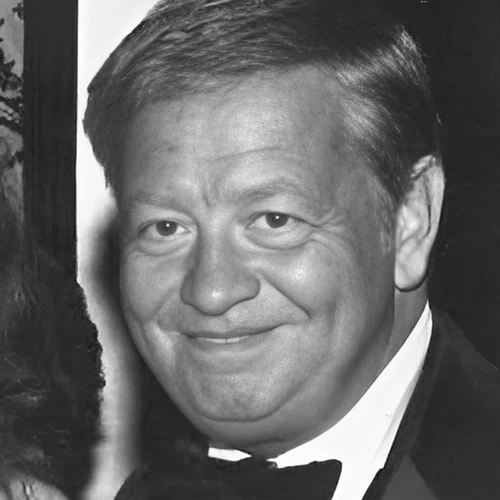
Mel Tormé was a multifaceted entertainer whose remarkable career spanned radio, music, television, and beyond. Known as "The Velvet Fog" for his smooth vocal style, Tormé was far more than just a singer—he was a pioneering artist who left an indelible mark on American entertainment.
Early Life and Musical Beginnings
Born Melvin Howard Tormé on September 13, 1925, in Chicago, Illinois, he emerged from a Jewish family with deep artistic roots. Growing up in a predominantly Black neighborhood, Tormé was profoundly influenced by jazz from an early age. His musical journey began remarkably early—he first performed professionally at just four years old, singing at a Chicago restaurant and earning $15 per night. Tormé's childhood was steeped in music. His father, William David Tormé, was an immigrant with a beautiful voice, and his family environment was rich with musical and entertainment influences. His Uncle Al Tormé provided his only formal musical education, teaching him piano and drums. By age 13, Tormé was already composing his own songs, and at 16, his first published song became a hit for a bandleader.
Radio and Early Professional Career
The 1940s marked Tormé's explosive entry into professional entertainment. From 1942 to 1943, he was a member of a band, serving as both singer and drummer. His radio career began early, with appearances in radio programs from 1933 to 1941. In 1944, he formed the Mel-Tones, a vocal quintet that was among the first jazz-influenced vocal groups, pioneering a style later followed by many other performers. Tormé's unique talents quickly gained recognition. In 1947, he started his solo singing career, performing at New York's Paramount Theater. It was here that a local disc jockey gave him the nickname "the Velvet Fog"—a moniker Tormé himself humorously despised. His radio program, Mel Tormé Time, appeared on a short-lived network in the 1950s.
Expanding Artistic Horizons
Beyond radio, Tormé was a true renaissance man. He made his movie debut in 1943 and became a teen idol through musical films. His television career was equally impressive, with appearances on numerous shows and even writing episodes for some series. He was particularly notable for his guest appearances on Night Court, where the show's judge was depicted as an unabashed Tormé fan. Tormé was also a prolific writer. He authored several books, including The Other Side of the Rainbow about his time working with Judy Garland, and an autobiography It Wasn't All Velvet. He wrote over 250 songs, including the classic Christmas tune "The Christmas Song" (also known as "Chestnuts Roasting on an Open Fire").
Legacy and Later Career
The 1970s and 1980s saw a resurgence in Tormé's career. He performed up to 200 times annually, winning international awards and collaborating with legendary musicians like George Shearing. His musical partnership with Shearing was particularly noteworthy, with Shearing describing their collaboration as "the best musical marriage in many a year". Tragically, a stroke ended Tormé's 65-year singing career in 1996. He passed away on June 5, 1999, at the age of 73, leaving behind a rich legacy in music, radio, and entertainment.
Works and Appearances
Radio
- Mel Tormé Time (1950s)
- Various radio programs (1933-1941)
Television
- Night Court (10 guest appearances, 1986-1992)
- The Judy Garland Show (1963-1964)
- Happy New Year, U.S.A. (1988, host)
Films
- Higher and Higher (1943)
- Good News (1947)
- Various film appearances from 1943-1991
Books
- The Other Side of the Rainbow (1970)
- Traps, the Drum Wonder (1991)
- It Wasn't All Velvet (autobiography, 1988)
- Wynner (novel, 1978)
Mel Tormé was truly a remarkable artist whose talents transcended traditional entertainment boundaries, making him a unique and unforgettable figure in 20th-century American culture.