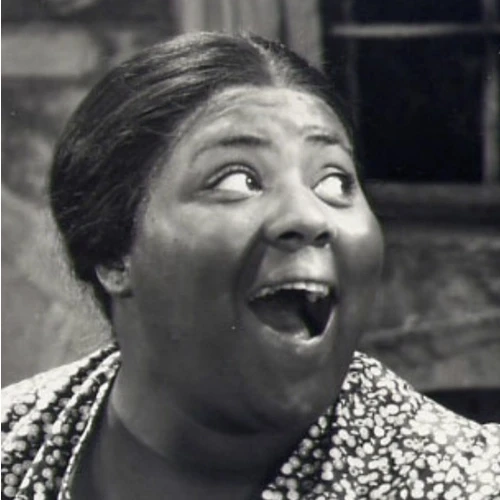
Louise Beavers
In the golden age of entertainment, few performers navigated the complex landscape of race and representation as skillfully as Louise Beavers. A trailblazing actress who transcended the limited roles offered to African American performers, Beavers became a pivotal figure in early radio and television, challenging stereotypes while simultaneously working within the constraints of her era.
Early Life and Theatrical Beginnings
Born in Cincinnati, Ohio in 1900, Louise Beavers discovered her performance talents early. Her mother, a school teacher and voice instructor, nurtured her musical abilities, teaching her to sing and encouraging her artistic development. After moving to Pasadena, California, Beavers began exploring performance opportunities, initially joining the Lady Minstrels, a group of young women who staged amateur productions. Her first professional performance breakthrough came when she appeared on stage at the Loews State Theatre. Her talent caught the eye of Charles Butler, an agent representing African American actors, who encouraged her to audition for film roles. Initially hesitant due to the negative portrayals of Black performers, Beavers ultimately decided to pursue acting, determined to bring dignity to her roles.
Radio and the Beulah Breakthrough
Beavers's radio career was most notably defined by her role in The Beulah Show, a groundbreaking series that represented one of the first instances of an African American performer headlining a radio program. Following Hattie McDaniel, Beavers became the third actor—and final radio performer—to portray Beulah Brown during the show's 1953-1954 run. The Beulah franchise was revolutionary yet complicated. While it provided unprecedented visibility for Black performers, the show simultaneously reinforced problematic domestic worker stereotypes. Beavers was acutely aware of these dynamics, using her platform to subtly challenge racial representations whenever possible.
Navigating Hollywood's Racial Landscape
Throughout her career, Beavers consistently demonstrated remarkable resilience and strategic navigation of Hollywood's racial barriers. Despite frequently being cast in roles as maids, housekeepers, and domestic workers, she approached each character with nuance and humanity. Her performances went beyond stereotypical caricatures, imbuing her characters with depth and emotional complexity. In films like Imitation of Life (1934), Beavers transcended the typical supporting role, creating a character with genuine emotional gravity. Her portrayal of Delilah Johnson was so compelling that some critics noted the Academy's inability to recognize Black performers during that era.
Legacy of Representation and Advocacy
Beyond her performances, Beavers was an active advocate for African American representation in media. She consistently spoke out against Hollywood's discriminatory practices, believing that visibility—even in limited roles—was a crucial step toward broader social change. Her philosophy was pragmatic: "I am only playing the parts. I don't live them." Beavers supported civil rights leaders and used her public platform to challenge systemic racism. She became a prominent member of the Los Angeles Black community, involved in various social and cultural initiatives. Her work laid critical groundwork for future generations of Black performers.
Conclusion
Louise Beavers represents a pivotal figure in entertainment history—an actress who transformed limitations into opportunities. Her radio, film, and television career was not just about performance, but about gradually expanding the boundaries of representation for African American artists.
Works and Appearances
Radio
- The Beulah Show (1953-1954) - Beulah Brown
Television
- Beulah (1952-1953) - Title Role
- Various guest appearances
Film
- Imitation of Life (1934) - Delilah Johnson
- Numerous films from 1927-1960, primarily in supporting roles
Stage
- Lady Minstrels (Early Career)
- Various theatrical tours (up to 20 weeks annually)
Louise Beavers passed away in 1962, leaving an indelible mark on American entertainment and paving the way for future generations of performers of color.