Laurence Olivier
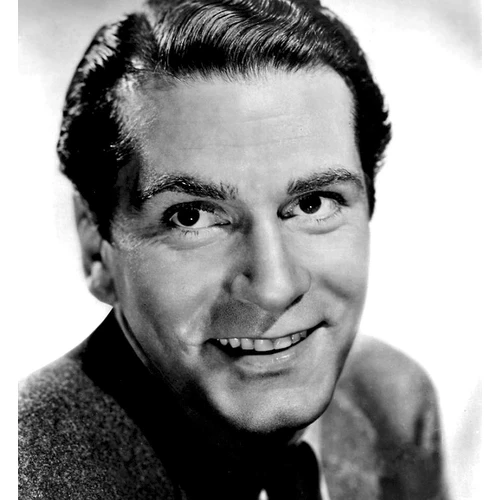
Laurence Kerr Olivier, Baron Olivier, OM (/lɒrəns ɵlɪvi.eɪ/; 22 May 1907 – 11 July 1989) was a British actor, director, and producer. An Anglicanclergyman's son, Olivier became determined early on to master Shakespeare, and eventually came to be regarded as one of the foremost Shakespeare interpreters of the 20th century. His three Shakespeare films as actor-director, Henry V (1944), Hamlet (1948), and Richard III (1955), are among the pinnacles of the bard at the cinema. Olivier was the youngest actor to be knighted as a Knight Bachelor, in 1947, and the first to be elevated to the peerage two decades later. In addition to Shakespeare, during a six decade career, Olivier played many other roles on stage and screen. On stage his more than 120 roles included Richard III, Macbeth, Romeo, Hamlet, Uncle Vanya, and Archie Rice in The Entertainer. He appeared in nearly 60 films, including William Wyler's Wuthering Heights (1939), Alfred Hitchcock's Rebecca (1940), Stanley Kubrick's Spartacus (1960), and Joseph L. Mankiewicz's Sleuth(1972). His other Shakespeare roles for the cinema were as Orlando in As You Like It (1936) and the lead in Othello (1965), with virtually the entire cast from the production at the Old Vic of the National Theatre Company, of which he was then artistic director. He had earlier filled the same post at the Old Vic after World War II. The largest stage in the National Theatre building was later named after him. Olivier retired from the stage in 1973, but his work on screen continued until the year before his death in 1989.For television, he starred in Long Day's Journey into Night (1973), The Merchant of Venice (1973), Cat on a Hot Tin Roof (1976), Brideshead Revisited (1981), and King Lear (1983), among others. The later cinema films included John Schlesinger's Marathon Man (1976) and Richard Attenborough's A Bridge Too Far (1977). Actor Spencer Tracy stated that Olivier was "the greatest actor in the English-speaking world", but director Jonathan Miller has said: "I hope that no actor tries to copy him." Olivier's AMPAS acknowledgments are considerable: twelve Oscar nominations, with two awards (for Best Actor and Best Picture for the 1948 film Hamlet), plus two honorary awards including a statuette and certificate. He was also awarded five Emmy awards from the nine nominations he received. Additionally, he was a three-time Golden Globe and BAFTA winner. He married three times, to actresses Jill Esmond, Vivien Leigh, and Joan Plowright, his widow. Early life Olivier was born on 22 May 1907 in Dorking, Surrey, England. He was raised in a severe, strict, and religious household, ruled over by his father, Gerard Kerr Olivier (1869–1939), a High Anglicanpriest whose father was Henry Arnold Olivier, a rector. Olivier took solace in the care of his mother, Agnes Louise (née Crookenden; 1871–1920, the younger sister of High Anglican vicar George Pelham Crookenden), and was grief-stricken when she died (at 48) when he was only 12. Gerard Dacres "Dickie" (1904–1958) and Sybille (1901–1989) were his two older siblings. His uncle was Sydney Olivier, 1st Baron Olivier, a career civil servant and Fabian who ended up as a Governor of Jamaica and as Secretary of State for India in the first government of Ramsay MacDonald. Another uncle was the artist Herbert Arnould Olivier. In 1918, his father became the new church minister at St. Mary's Church, Letchworth, Hertfordshire, and the family lived at the Old Rectory, now part of St Christopher School. He was educated at the choir school of All Saints', Margaret Street, London. He played Brutus in his school's production of Julius Caesar at the age of 9, where Ellen Terry noted he was "already a great actor".At 13, he went to St Edward's School, Oxford, again appearing in school drama productions: he was a "bold" Katherine in The Taming of the Shrew (selected for a schools' drama festival at theShakespeare Memorial Theatre, Stratford) and Puck in A Midsummer Night's Dream, played "very well, to everyone's disgust", as Olivier noted in his diary. After his brother, Dickie, left for India, it was his father who decided that Laurence—or "Kim", as the family called him—would become an actor. Early career Olivier, 17 years old, attended the Central School of Speech and Drama, tutored by Elsie Fogerty. In 1926, he joined the Birmingham Repertory Company. At first he was given only minor tasks at the theatre, such as bell-ringing; however, his roles eventually became more significant, and in 1927 he was playing Hamlet and Macbeth. In 1928, he was cast to play Captain Stanhope in the Apollo theatre's first production of Journey's End, a play which would expand his career. He always insisted that his acting was pure technique, and he was contemptuous of contemporaries who adoptedmethod acting popularised by Lee Strasberg. Olivier married Jill Esmond, a rising young actress, on 25 July 1930; their only son, Simon Tarquin was born on 21 August 1936. Olivier was, however, from the beginning not happy in his first marriage. Repressed, as he came to see it, by his religious upbringing, Olivier recounted in his autobiography the disappointments of his wedding night, culminating in his failure to perform sexually. He temporarily renounced religion and soon came to resent his wife, though the marriage would last for ten years. Despite this supposed resentment, Olivier remained in congenial contact with Esmond until his death (as documented by their son Tarquin in his book, My Father Laurence Olivier), accompanying her to Tarquin’s wedding in January 1965. He made his film debut in The Temporary Widow and played his first leading role on film in The Yellow Ticket; however, he held the film in little regard. His stage breakthrough was in Noël Coward's Private Lives in 1930, followed by Shakespeare's Romeo and Juliet in 1935, alternating the roles of Romeo and Mercutio with John Gielgud. Olivier did not agree with Gielgud's style of acting Shakespeare and was irritated by the fact that Gielgud was getting better reviews than he was. His tension towards Gielgud came to a head in 1940, when Olivier approached London impresario Binkie Beaumont about financing him in a repertory of the four great Shakespearean tragedies of Hamlet, Othello, Macbeth and King Lear. However, Beaumont would agree to the plan only if Olivier and Gielgud alternated in the roles of Hamlet/Laertes, Othello/Iago, Macbeth/Macduff, and Lear/Gloucester and that Gielgud direct at least one of the productions, a proposition Olivier declined. In 1939, Olivier starred in a production of No Time for Comedy, by S.N. Behrman in a Katharine Cornell production with them both in leading roles. It was his first prominent role on Broadway.The engagement as Romeo resulted in an invitation by Lilian Baylis to be the star at the Old Vic in 1937/38. Olivier's tenure had mixed artistic results, with his performances as Hamlet and Iagodrawing a negative response from critics and his first attempt at Macbeth