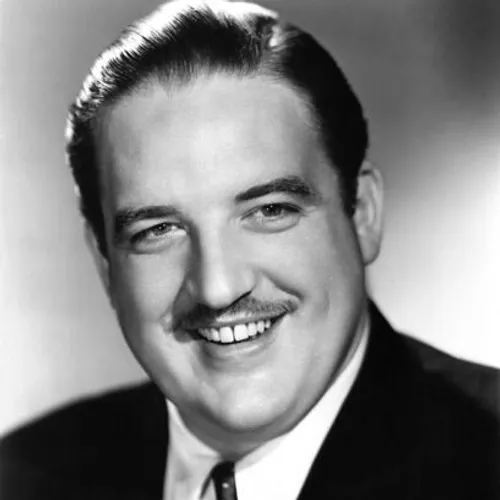
Laird Cregar
Samuel Laird Cregar was an American film actor, the youngest of six sons of Edward Matthews Cregar, a cricketer and member of a team called the Gentlemen of Philadelphia. They toured internationally in the late 1890s and early 1900s. Laird's mother was the former Elizabeth Smith.
Laird Cregar was a remarkable performer whose brief but intense career spanned stage, radio, and film, leaving an indelible mark on 1940s entertainment despite his tragically short life. Known for his imposing physical presence and nuanced character portrayals, Cregar was a complex artist who defied Hollywood's typical casting conventions and sought to transcend the limitations imposed by his size and early typecasting.
Early Life and Theatrical Beginnings
Born Samuel Laird Cregar on July 28, 1913, in Philadelphia, he was the youngest of six sons in a working-class family. From an early age, Cregar displayed a remarkable talent for performance and reinvention. Interestingly, much of his early biographical narrative was crafted by Cregar himself, who was known to embellish his background. Despite fabricating stories about his education and early experiences, Cregar's passion for acting was genuine. He spent time at the Pasadena Playhouse, where he gradually developed his craft. His breakthrough came with a production of Oscar Wilde, which he performed at the El Capitan Theatre in Hollywood in 1940. This performance was a turning point, with the Los Angeles Times declaring he "scored a sensational success" .
Radio and Early Film Career
Cregar's transition into radio and film was swift and impressive. His radio work included notable appearances on programs in 1943 and 1944, though specific details are limited in the provided sources. His film career began with uncredited roles in 1940, quickly escalating to more substantial parts. By 1941, he had signed with 20th Century Fox and began appearing in significant roles. His performances were characterized by a remarkable ability to portray complex, often villainous characters. Critics noted his unique screen presence, describing him as "mountainous" and capable of suggesting "reserves of violence and rage held barely in check" .
Artistic Ambition and Personal Struggles
Cregar was deeply ambitious, constantly seeking to break free from being typecast as a character actor. His sexuality, which was complicated and not openly discussed during his era, seemed to inform his artistic sensibilities. Memoirists consistently identified him as homosexual, and some critics suggested his performances were a form of personal expression. His most significant struggle was with his weight. Determined to be seen as a leading man, Cregar undertook extreme dieting and eventually sought surgical intervention. Tragically, these efforts would contribute to his untimely death. He underwent a crash diet and what was essentially an early form of weight-loss surgery, which placed immense strain on his health.
Final Years and Lasting Legacy
In his final years, Cregar continued to pursue challenging roles. His performances in films like The Lodger (1944) and Hangover Square (1945) were critically acclaimed. Variety declared The Lodger as "Laird Cregar's picture", highlighting his growing prominence. Sadly, Cregar's promising career was cut short. After undergoing surgery in December 1944, he suffered a heart attack and died on December 9, 1944, at just 31 years old. At the time of his death, he was scheduled to appear in an adaptation of Les Misérables and was being considered for a Broadway production.
Conclusion
Laird Cregar was a unique talent who challenged Hollywood's conventions. His brief but intense career demonstrated remarkable range, from villainous characters to nuanced dramatic roles. Despite his short life, he left an enduring impression on the entertainment world, remembered as an actor of extraordinary depth and potential.
Works and Appearances
Radio
- Various unspecified programs (1943-1944)
Film
- Oh Johnny, How You Can Love (1940) - Uncredited Mechanic
- Hudson's Bay (1941)
- Blood and Sand (1941)
- Charley's Aunt (1941)
- I Wake Up Screaming (1941)
- Joan of Paris (1942)
- This Gun for Hire (1942)
- The Black Swan (1942)
- Heaven Can Wait (1943)
- The Lodger (1944)
- Hangover Square (1945) - Posthumous Release
Theater
- Oscar Wilde (1940) - Title Role
- The Man Who Came to Dinner (1941, 1944)