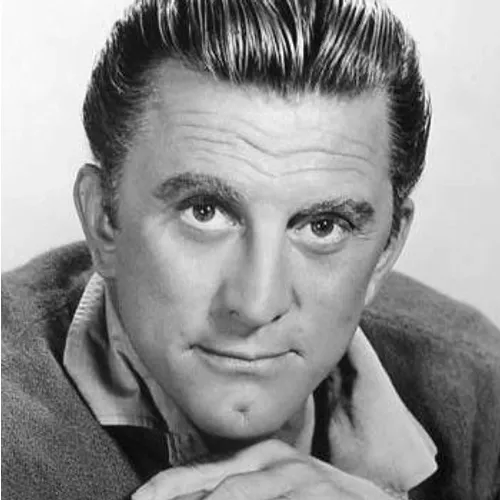
Kirk Douglas
Kirk Douglas, primarily known as a legendary Hollywood actor, also made significant contributions to the early days of radio broadcasting. His versatile talent and dynamic presence helped shape the entertainment landscape of mid-20th century America, with radio serving as a crucial stepping stone in his remarkable career.
Early Life and Radio Aspirations
Born Issur Danielovitch in Amsterdam, New York, Kirk Douglas discovered his passion for performance early in life. As a young man, he recognized the power of voice and storytelling, which would become instrumental in his radio career. Growing up in a challenging economic environment, Douglas worked numerous jobs to support his family, demonstrating the determination that would later define his professional journey. After graduating from college in 1939, Douglas pursued acting with unwavering commitment. Radio became his initial platform for honing his craft, where he found valuable experience in network soap operas. He viewed radio work as an essential training ground for developing vocal skills, recognizing that mastering voice modulation was crucial for aspiring actors.
Breaking into Radio Broadcasting
Douglas's radio breakthrough came through network soap operas, where he developed his vocal techniques and storytelling abilities. His stage performance in The Wind Is Ninety (1943) further opened doors to radio opportunities. During this period, he saw radio as more than just a medium—it was a sophisticated art form that required precision and emotional depth. The young actor approached radio work with remarkable professionalism, understanding that vocal performance demanded nuanced interpretation. His ability to convey complex emotions through voice alone made him a promising radio personality.
Transition to Other Media
While radio was an important early platform, Douglas quickly transitioned to more visual mediums. His radio experience provided a strong foundation for his subsequent work in theater, film, and television. Interestingly, he maintained a connection to audio performance throughout his career, occasionally returning to radio formats. Between 1947 and 1954, Douglas made several notable radio appearances on programs like Suspense and Lux Radio Theatre, demonstrating his continued engagement with the medium. These appearances showcased his versatility and helped establish his reputation as a dynamic performer.
Legacy in Entertainment
Douglas's radio work was just the beginning of an extraordinary entertainment career. He became a Hollywood icon, starring in numerous critically acclaimed films and receiving multiple award nominations. His radio experience contributed significantly to his ability to captivate audiences across different media platforms.
Conclusion
Kirk Douglas's journey through radio represents more than just a preliminary stage in his career—it was a crucial period of artistic development. His commitment to vocal performance and storytelling in radio laid the groundwork for his later success in film and television.
Works and Appearances
Radio Appearances
- Suspense (1947, 1950)
- Episodes: "Community Property", "The Butcher's Wife"
Other Media
- Film: Numerous Hollywood classics from 1940s-2000s
- Television: Various appearances and TV movies
- Theater: Broadway and stage performances
Kirk Douglas's radio legacy demonstrates how versatile performers of his era seamlessly navigated multiple entertainment platforms, setting the stage for future multimedia artists.
Heard in