Judy Holliday
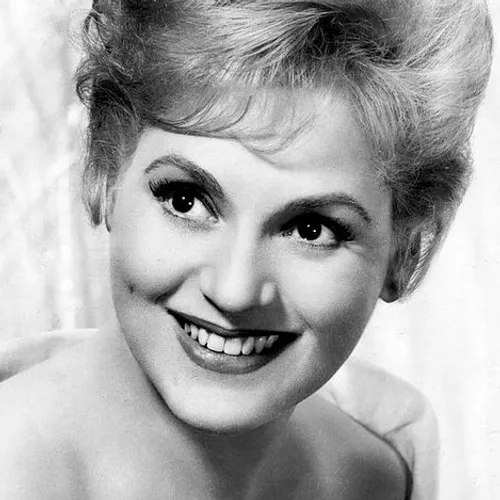
Judy Holliday was a remarkable performer whose razor-sharp wit and unique comedic talent transcended multiple entertainment mediums. Though best known for her film and stage work, her early career in radio and nightclub performances laid the groundwork for her extraordinary artistic journey. Her ability to blend intelligence, vulnerability, and comedic brilliance made her a standout performer of her era.
Early Life and Artistic Beginnings
Born Judith Tuvim on June 21, 1921, in Queens, New York, Holliday emerged from a creative and politically engaged family. Her father Abe was a political activist, and her mother Helen was a piano teacher. Both were of Jewish descent, and young Judith would later take her stage name from the Hebrew phrase yamim tovim, meaning "holidays" . Holliday's artistic journey began in the late 1930s with a groundbreaking nightclub act called The Revuers. This innovative performance group included talents like Adolph Green and Betty Comden. Despite her initial shyness, Holliday was determined to succeed. She candidly recalled being so nervous that she would "vomit between shows" and found the smoky, raucous nightclub environments challenging .
Radio and Early Performance Career
The Revuers performed in notable New York venues like Spivy's Roof and the Blue Angel, gradually building a reputation for innovative comedy. In 1940, they even released a recording called Night Life in New York. Though the group disbanded in early 1944, it served as a crucial launching pad for Holliday's career . Her first significant acting opportunities came through film, with an uncredited role in Greenwich Village (1944) and a bit part in Something for the Boys. Her breakthrough came in 1945 when she made her Broadway debut and was recognized as a Most Promising Female Actress .
Broadway and Hollywood Breakthrough
Holliday's most iconic role came in the 1946 Broadway production of Born Yesterday, where she portrayed the character Billie Dawn. Her performance was so compelling that when Columbia Pictures adapted the play, director George Cukor and others conspired to ensure she would be cast in the film . Her film performance in Born Yesterday was nothing short of extraordinary. In 1950, she won the Academy Award for Best Actress, defeating heavyweight competitors like Gloria Swanson and Bette Davis. Her portrayal of Billie Dawn showcased her remarkable ability to blend comedic timing with genuine emotional depth .
Navigating Political Challenges
During the politically charged McCarthy era, Holliday faced potential career-ending challenges. In 1952, she was called to testify before the House Un-American Activities Committee regarding alleged Communist sympathies. Remarkably, she navigated this dangerous terrain with wit and integrity, refusing to "name names" while maintaining her professional standing . Her friend Woody Guthrie received a letter from her expressing pride in her approach, writing, "I'm not ashamed of myself, because I didn't name names." The investigation ultimately did not reveal any Communist Party membership, and her career remained largely unaffected .
Legacy and Final Years
Throughout the 1950s and early 1960s, Holliday continued to shine in both stage and film, winning a Tony Award for Bells Are Ringing in 1957. Tragically, her brilliant career was cut short when she was diagnosed with cancer. She passed away on June 7, 1965, at the young age of 43 . Film historian Bernard Dick captured her essence perfectly, noting her "vulnerability" and ability to shift "from comic to serious" with remarkable skill. Director George Cukor praised her capacity to touch "your heart" unexpectedly .
Works and Appearances
Radio
- Various appearances on The Big Show (1951)
- Ford Theater (1948)
- Hear It Now (1951)
Stage
- Born Yesterday (1946) - Billie Dawn
- Dream Girl (1951) - Georgina Allerton
- Bells Are Ringing (1956) - Ella Peterson
- Hot Spot (1963) - Sally Hopwinder
Film
- Born Yesterday (1950) - Billie Dawn
- Adam's Rib (1949) - Doris Attinger
- The Marrying Kind (1952) - Florrie Keefer
- It Should Happen to You (1954) - Gladys Glover
- Bells Are Ringing (1960) - Ella Peterson
Judy Holliday's remarkable career, though tragically brief, left an indelible mark on American entertainment, embodying intelligence, humor, and genuine human vulnerability.