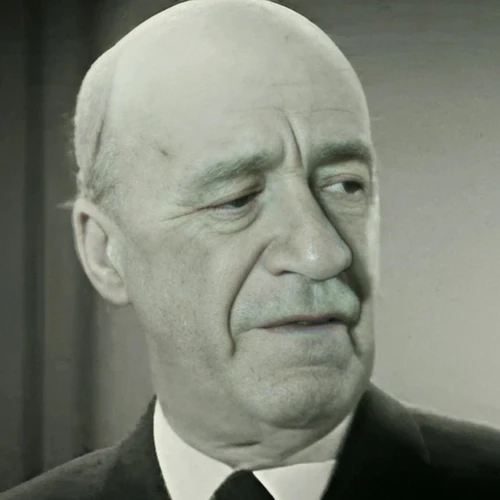
Joseph Farrell MacDonald
In the golden age of American cinema, few performers embodied the spirit of character acting quite like J. Farrell MacDonald. A prolific talent who seamlessly transitioned from stage to silent films and then to talkies, MacDonald became a quintessential supporting actor whose distinctive presence graced over 325 films across four remarkable decades.
Early Life and Theatrical Beginnings
Born Joseph Farrell MacDonald on June 6, 1875, in Waterbury, Connecticut, he emerged from a background that would prove instrumental in his future career. A Yale University graduate who earned his B.A. in 1903, MacDonald was not just an academic but also an athlete, playing football during his college years. Before entering the film world, MacDonald honed his performance skills in the vibrant theatrical landscape of early 20th-century America. He toured extensively as a singer in minstrel shows, developing the vocal and performative skills that would later serve him brilliantly in cinema. His stage experience included touring with various productions, including a notable tour with Lillian Russell in The Princess Nicotine.
The Silent Film Era: From Director to Character Actor
MacDonald's entry into filmmaking was multifaceted. He began his cinematic journey in 1911 with a dramatic short, The Scarlet Letter, produced by Independent Moving Pictures (IMP), a precursor to Universal Studios. Remarkably, he quickly transitioned from acting to directing, helming 44 silent films between 1912 and 1917. By 1918, MacDonald had shifted his focus entirely to acting, becoming one of Hollywood's most beloved character actors. He developed a particularly strong collaboration with legendary director John Ford, appearing in 25 films between 1919 and 1950. Notable silent film collaborations included The Iron Horse (1924), 3 Bad Men (1926), and Upstream (1927).
Mastering the Transition to Sound Films
When sound arrived in cinema, MacDonald's career didn't just survive—it thrived. His distinctive voice matched his on-screen persona perfectly, allowing him to maintain and even increase his acting output. In 1931 alone, he appeared in 14 films, and in 1932, he was in 22 films. MacDonald became known for portraying a wide range of characters: laborers, policemen, military men, and priests. His roles were consistently more substantial than mere background characters, often with named parts and credited performances. A standout performance was his portrayal of a hobo in Our Little Girl (1935), demonstrating his remarkable emotional range.
Hollywood's Beloved Supporting Actor
In the 1940s, MacDonald became part of Preston Sturges' unofficial repertory company, appearing in seven of the director's films. His work with Sturges, though often uncredited, was consistently high-quality. He was particularly memorable in John Ford's My Darling Clementine (1946), where he played "Mac," the town saloon bartender. MacDonald's final film was a comedy in 1951, marking the end of an extraordinary career that spanned four decades. He made a few television appearances in the same year before retiring.
Legacy and Personal Life
MacDonald was married to actress Edith Bostwick until her death in 1943, and they had a daughter named Lorna. He passed away in Hollywood on August 2, 1952, at the age of 77.
Works and Appearances
Film (Selected Highlights)
- Silent Films:
- The Scarlet Letter (1911) - Film Debut
- The Iron Horse (1924)
- 3 Bad Men (1926)
Television
- Superman episode (1951)
Directing
- 44 silent films between 1912-1917, including The Patchwork Girl of Oz (1914) and His Majesty, the Scarecrow of Oz (1914)
