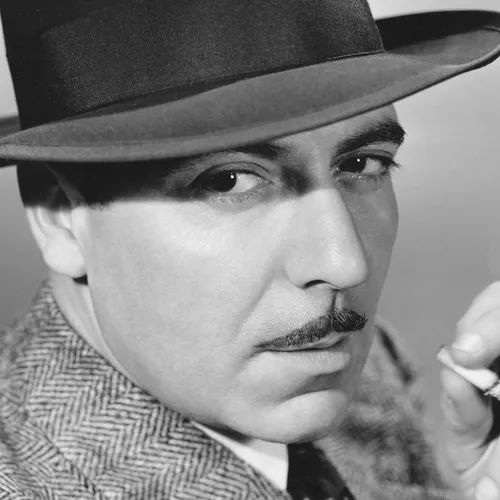
Joseph Calleia
Joseph Calleia was a multifaceted performer whose remarkable journey from Malta to the American entertainment landscape made him a distinctive figure in radio, stage, and screen. His rich baritone voice and compelling character portrayals would define his career across multiple media platforms during the mid-20th century.
Early Life and Theatrical Beginnings
Born Joseph Alexander Caesar Herstall Vincent Calleja on August 4, 1897, in Notabile, Malta, Calleia's artistic journey began early. At just 12 years old, he demonstrated entrepreneurial spirit by purchasing harmonicas and organizing a local band that earned substantial weekly earnings. His father initially sent him to London to study engineering, but Calleia's passion for performance soon took precedence. After serving in the merchant marine during World War I, Calleia traveled to the United States in 1917. Facing initial financial challenges, he worked various jobs while pursuing his theatrical dreams, including stoking furnaces and washing streetcars in New York City. His persistence paid off when he secured his first stage roles, initially in musical comedies and chorus lines.
Rise in Broadway and Radio
Calleia's breakthrough came with his first speaking role in The Broken Wing (1920), where he not only performed but also composed the song "Adelai" in collaboration with George Abbott. His theatrical reputation grew steadily, with acclaimed performances in productions like Broadway (1926) and Small Miracle (1934), where he became known for his compelling villain portrayals. In radio, Calleia became a versatile performer. His select radio credits included appearances on Kraft Music Hall in 1939, where he sang his signature song, and The Screen Guild Theater in 1940, demonstrating his ability to translate stage presence into audio performance.
Hollywood and Wartime Contributions
During World War II, Calleia's contributions extended beyond entertainment. He became a naturalized American citizen in 1941 and led the Malta War Relief organization in the United States. He also toured military camps in North Africa, including a poignant return to his homeland, Malta, entertaining service personnel. In cinema, Calleia excelled at portraying complex characters. He deliberately sought roles that weren't purely villainous, stating, "I enjoy roles where I get slapped around a bit. It's far more stimulating to play a character that isn't all one thing—not all bad and not all good."
Legacy and Later Years
Calleia's versatility was recognized by contemporaries like Orson Welles, who praised him as "one of the best actors" he had ever known. His performance in Welles's Touch of Evil (1958) is considered one of his career's pinnacles. After a distinguished career spanning stage, radio, and screen, Calleia retired to Sliema, Malta in 1963. He was posthumously honored by Malta with commemorative stamps in 1997, and a bust was installed at his birthplace in 2005.
Works and Appearances
Radio
- Kraft Music Hall (1939) - Guest Star
- The Screen Guild Theater (1940) - Various Roles
- Stage Door Canteen (1943-1944) - Guest Star
- Theatre Guild on the Air (1948) - Various Roles
Stage
- The Broken Wing (1920)
- Broadway (1926)
- Small Miracle (1934)
- Grand Hotel (1930)
Film
- Public Hero No. 1 (1935)
- Five Came Back (1939)
- Touch of Evil (1958)
Television
- Pulitzer Prize Playhouse
- Have Gun - Will Travel
- Bob Hope Presents the Chrysler Theatre
Joseph Calleia's remarkable journey from a young Maltese musician to a respected American performer exemplifies the transformative power of talent, perseverance, and artistic versatility.
