John Loder
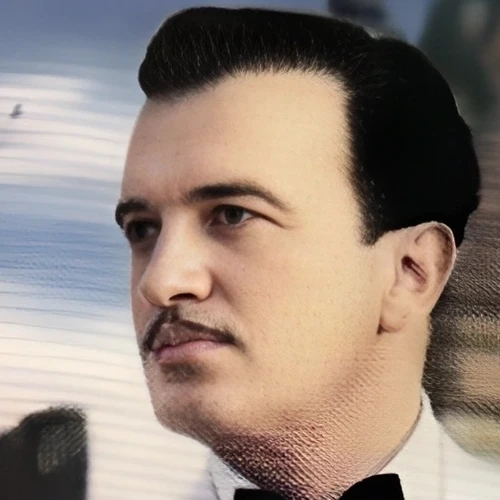
In the vibrant landscape of mid-20th century broadcasting, John Loder emerged as a versatile performer who seamlessly bridged the worlds of film and radio. His distinctive voice and commanding presence made him a notable figure in the Silver Theater radio program, capturing the imagination of listeners during radio's golden era.
Early Life and Theatrical Beginnings
Born William John Muir Lowe on January 3, 1898, in London, England, Loder's journey into entertainment was anything but conventional. The son of a career military officer, he initially followed a path of service, being commissioned into the military during World War I. After his military experience, Loder's entrepreneurial spirit led him to an unexpected venture - a pickle factory in Germany - before he discovered his true calling in performance. His artistic inclinations first blossomed in Berlin, where he appeared at the British Theatre Guild. Loder quickly gained recognition in theatrical productions, establishing himself as a promising performer with a distinctive presence. His early experiences in German theater and cinema laid the groundwork for his future career in entertainment.
Transition to Radio Broadcasting
Loder's radio career took flight during the 1940s, most notably as the host of the Silver Theater dramatic anthology program. This radio show was a significant platform that showcased his versatility as a performer. In the June 11, 1944 episode, Loder not only hosted but also starred, demonstrating his ability to command the airwaves. His radio work coincided with a prolific period in his film career, where he was frequently cast in supporting roles and B-movies. The Silver Theater provided Loder with an opportunity to reach audiences beyond the silver screen, allowing him to showcase his narrative skills and dramatic range.
Professional Collaborations and Style
Throughout his radio career, Loder was known for his quintessentially British persona and upper-class characterizations. His performances often reflected a refined, sophisticated style that resonated with audiences of the era. In radio, as in film, he frequently portrayed characters of noble or professional backgrounds, leveraging his distinctive vocal qualities. Loder's ability to transition between mediums - from stage to film to radio - made him a versatile performer. His work on the Silver Theater demonstrated his skill in dramatic storytelling, bringing scripts to life with nuance and depth. This adaptability was a hallmark of his professional approach.
Later Career and Legacy
As the golden age of radio began to wane, Loder's career gradually shifted. While he continued to make occasional film appearances, his focus increasingly turned towards business interests. By the late 1940s and 1950s, his professional activities became more diverse, reflecting the changing entertainment landscape. Loder's contribution to radio, though perhaps not as extensively documented as his film career, remains a significant chapter in broadcasting history. His work on the Silver Theater represents an important moment in the evolution of dramatic radio programming.
Conclusion
John Loder exemplified the multi-talented performer of mid-20th century entertainment. From his early theatrical days in Germany to his radio hosting duties, he navigated the complex world of performance with grace and skill. While he may not be a household name today, his contributions to radio and film during a transformative period in media history are noteworthy.
Works and Appearances
Radio
- Silver Theater (1940s)
- Host and performer
- Dramatic anthology program
- Active during World War II era
Film
- Numerous supporting roles in Hollywood productions (1929-1971)
- Notable films include various Warner Bros. productions in the 1940s
- Final film role in Allá donde el viento brama (1971)
Stage
- Brief Broadway appearance in For Love or Money (1947)
Other Media
- Published autobiography Hollywood Hussar (1977)