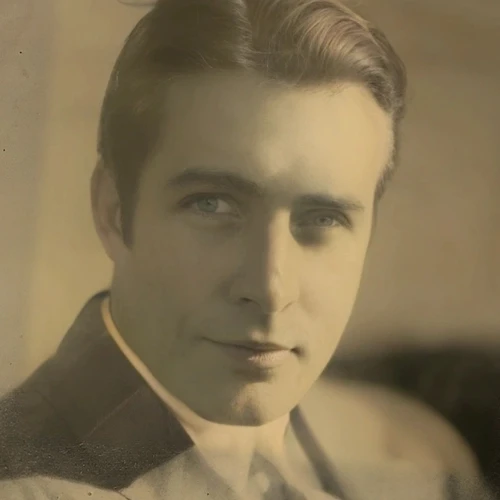
John Boles
In the golden age of Hollywood, few performers embodied the charm and versatility of John Boles, a talented actor and singer who captivated audiences with his melodious voice and magnetic screen presence. From Broadway stages to silver screen musicals, Boles carved a unique path through the entertainment landscape of the 1920s and 1930s.
From Texas Roots to Broadway Stages
Born on October 28, 1895, in Greenville, Texas, John Boles emerged from a middle-class family with dreams far beyond traditional expectations. Despite his parents' hopes for a medical career, Boles was drawn to the performing arts. After graduating from the University of Texas in 1917, he briefly served in the U.S. Army's intelligence service during World War I. His initial foray into performance came unexpectedly when a producer selected him to perform at the King Opera House in Greenville. This experience crystallized his passion for music and theater, setting him on a path that would lead him to New York's vibrant theatrical scene.
Rising Through the Ranks of Entertainment
Boles' journey was marked by diverse experiences. He supported himself by teaching French, singing in a high school, and working as a business manager and interpreter. These roles provided him with valuable life experiences and connections, including the opportunity to study under renowned tenor Jean de Reszke. His Broadway breakthrough came with the musical Little Jesse James in 1923, where he replaced the lead actor. This performance caught the attention of Hollywood producers, signaling the beginning of his film career.
The Talkie Revolution and Musical Stardom
The advent of sound in cinema perfectly suited Boles' talents. His beautiful voice became his greatest asset, transforming him from a silent film actor to a sought-after musical performer. Warner Brothers and RKO Pictures recognized his potential, casting him in lavish musical productions like The Desert Song (1929) and Rio Rita (1930). His performances were so compelling that RCA Victor hired him to record phonograph records of his film songs, a testament to his popularity.
Dramatic Roles and Hollywood Legacy
Beyond musicals, Boles demonstrated remarkable acting range. He portrayed Victor Moritz in the iconic horror film Frankenstein (1931) and starred alongside legendary actresses like Irene Dunne in The Age of Innocence (1934) and Shirley Temple in Curly Top (1935). His final film, Babes in Baghdad (1952), marked the end of his screen career. After retiring, he transitioned into the oil business and spent his later years in San Angelo, Texas.
Conclusion: A Timeless Performer
John Boles represents a quintessential era of Hollywood entertainment - a time when performers were expected to sing, act, and captivate audiences across multiple mediums. His contributions were recognized with a star on the Hollywood Walk of Fame in 1960.
Works and Appearances
Radio
- Frequent performer on CBS Radio
- Guest on Lux Radio Theatre
- Appeared in radio adaptations of films like "Seventh Heaven" (1934) and "Stella Dallas" (1937)
Film
- Frankenstein (1931) - Victor Moritz
- The Age of Innocence (1934)
- Curly Top (1935)
- Stella Dallas (1937)
- Babes in Baghdad (1952) - Final film
Broadway
- Little Jesse James (1923)
- Mercenary Mary (1924)
- Kitty's Kisses (1925)
- One Touch of Venus (1943)