If you enjoy the genteel academic satire of The Halls of Ivy or the staff‑room shenanigans of Our Miss Brooks, you’ll find a lot to love in Dr Tweedy’s world.
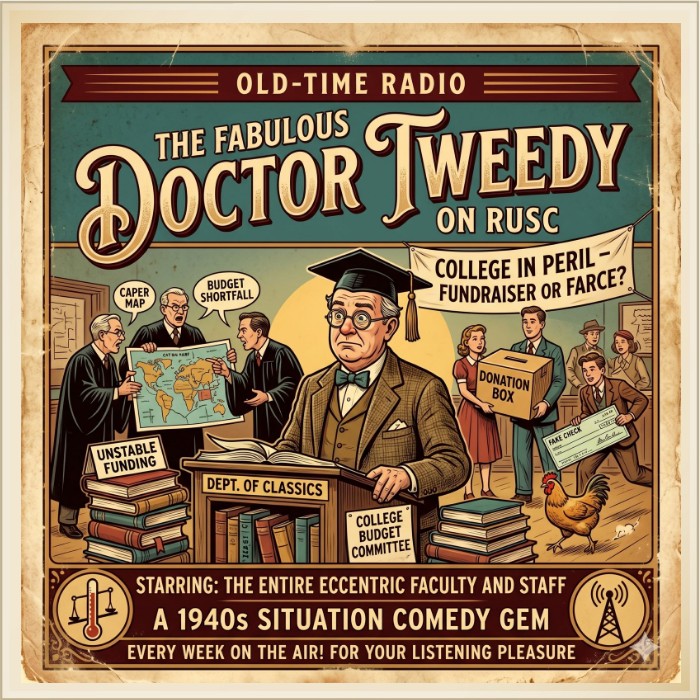
First, a little scene‑setting. In the mid‑to‑late 1940s, American radio leaned into school and campus comedies, tapping into a public suddenly very aware of college life. The G.I. Bill had swelled enrollments, cash‑strapped institutions were juggling space and standards, and the campus became a natural stage for gentle culture‑clash comedy: bookish ideals meeting budget realities, lofty lectures bumping into bustling student life. The Fabulous Dr Tweedy fits right into that moment. It’s a half‑hour situation comedy built around the misadventures of a well‑meaning, somewhat self‑important professor at a small, perpetually imperiled college—exactly the sort of place where faculty meetings double as farce and every fundraiser becomes a full‑blown caper.
What makes The Fabulous Dr Tweedy fun is its tone. The humor is soft‑shoe rather than slapstick: academic pride colliding with everyday common sense; elaborate plans upended by a bright student or a practical administrator; and plenty of wordplay along the way. The title’s boastful “Fabulous” sits in the grand tradition of radio’s affectionate hyperbole—think The Great Gildersleeve and, a few years later, The Magnificent Montague. Listeners are invited to smile at the character’s pomposity while rooting for his better angels. Nobody’s mean here; at worst, a dean is exasperated, a landlady is suspicious, a donor is dithering, or a student is one wisecrack ahead of the faculty.
As you work through the episodes this week, you’ll notice a handful of recurring ingredients that defined so many academic comedies of the era:
- Shoestring academia: Thaddeus Q. Tweedy, doctor of philosophy and dean of men at Potts College is forever scheming to save a program, find housing, stretch a budget, or keep a prized student from transferring. These plotlines echo real post‑war pressures on small colleges and give the show a pleasingly lived‑in backdrop.
- Faculty politics with a wink: Where Our Miss Brooks sharpened staff‑room satire and The Halls of Ivy offered a civilized roundtable, Dr Tweedy plays campus hierarchy for cozy laughs. Expect tetchy deans, officious committees, and rules that bend—or snap—under comedic strain.
- A revolving door of townsfolk: Boarders, neighbors, would‑be benefactors, and local dignitaries wander in to complicate matters. It’s a reminder that, in the radio imagination, colleges were villages within villages, porous to civic fuss and foible.
- Language as a toy: One of the series’ reliable pleasures is hearing the professor’s fine phrases tied in knots, or punctured by plainer talk—a favorite trick of radio writers whenever they put a scholar behind a microphone.
Because the series didn’t enjoy a long network run, relatively few episodes circulate today, and you’ll sometimes see different logs disagree over dates and titles. That’s not unusual; mid‑century paperwork could be spotty, and Armed Forces Radio rebroadcasts occasionally stripped commercials and retitled shows for overseas play. The copies I’m sharing this week reflect the best audio I’ve been able to source, and you may notice the occasional jump in fidelity from one recording to the next. If you happen to have a cleaner transfer in your personal collection, I’d love to hear from you—RUSC has been at its best when members help each other fill the gaps.
It’s also worth placing Dr Tweedy on the timeline. The Fabulous Dr. Tweedy ran for one season, about nine months, from September 16, 1946 to June 9, 1947.While the big classroom hits of the period—Our Miss Brooks (debuting in 1948) and The Halls of Ivy (1950)—would go on to enjoy lengthy runs and top‑flight critical notices, Dr Tweedy belongs to the earlier wave that tested the waters for academic comedy right after the war. You can hear the genre’s DNA forming: the tart exchanges between faculty and administration, the wry skewering of academic pretension, and that gentle insistence that education—however chaotic—matters. It’s fascinating to compare how these elements were later polished into the crackling staffroom repartee of Miss Brooks or the urbane civility of Ivy.
Why revisit The Fabulous Dr Tweedy now? For one, it’s a lovely reminder of radio comedy’s mid‑century range. Not every laugh needed a catchphrase or a giant studio orchestra; sometimes all it took was a self‑deluded intellectual, a skeptical colleague, and a campus with more charm than cash. For another, these smaller, short‑run shows paint the in‑between spaces of the Golden Age—how writers and actors experimented with settings and styles that would soon find firmer footing in better‑known series.
I’ll be adding the seven episodes throughout the week. When you've listened, be sure to share your impressions on the comments—favorite lines, standout characters, or any memories they evoke for you.
As always, if you’ve got leads on missing episodes, alternate airchecks, or even clippings and magazine blurbs that help pin down dates and credits, please get in touch. Half the fun of these rarities is the bit of sleuthing that goes with the listening.
Happy listening—and welcome back to campus with The Fabulous Dr Tweedy.