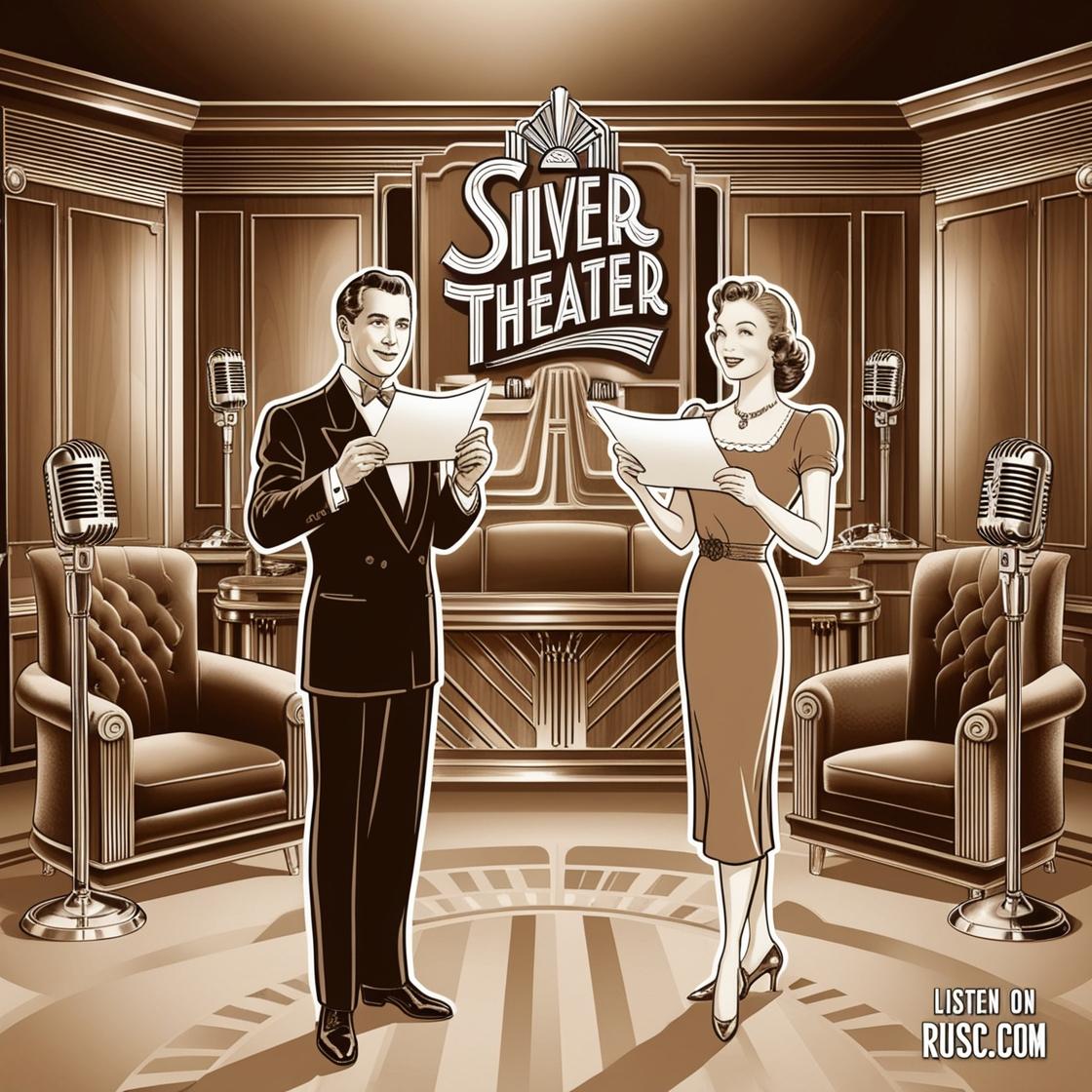
Broadcast on CBS in the United States and the Canadian Broadcasting Corporation in Canada, this beloved series first graced the air on October 3, 1937, and wrapped up nearly a decade later on August 17, 1947.
Unlike many radio dramas of the time, Silver Theater primarily featured original stories rather than adaptations, with only the occasional comedy thrown into the mix. Interestingly, in a reversal of the usual trend, some of the show’s original dramas were later purchased and adapted for the silver screen.
One of the defining aspects of Silver Theater was its rotating cast of Hollywood greats. The program didn't have a regular ensemble, but rather showcased different film stars in each episode. Many legends graced the Silver Theater stage, including:
- James Stewart
- Judy Garland
- Carole Lombard
- Ginger Rogers
- Rosalind Russell
- Loretta Young
Though the cast changed from week to week, one constant presence was the host, referred to on the air as the “director.” The show was originally led by Conrad Nagel, before John Loder took over in the early 1940s.
Supporting the program behind the scenes were several key figures, including a roster of announcers—John Conte, Dick Joy, Henry Charles, Roger Krupp, Jack Bailey, and Harry Bartell—along with Felix Mills, who directed the orchestra.
During its final season in 1947, when the series aired as a summer replacement program, the lineup changed slightly—movie stars stepped aside, and the lead roles were instead taken up by radio’s finest performers.
The program was sponsored by the International Silver Company, which made a memorable splash with its ingenious advertising campaign. For the show’s first broadcast in 1937, the sponsor invited couples who had been married for 25 years or more to attend the CBS studio—an elegant nod to the longevity of their signature 1847 Rogers Bros. silverware.
The success of this partnership was undeniable. International Silver was so pleased with the increase in sales that CBS ran a full four-page advertisement in Broadcasting magazine (March 1, 1940) highlighting the show's effectiveness. The company’s statements spoke for themselves:
“After thirteen weeks on CBS: ‘We find we can paint a more alluring picture … by radio than with the printed page.’” “After three years on CBS: ‘Substantial increase in sales for every year we have been on the air.’”
This success story didn’t stop at radio—International Silver also promoted the show in LIFE magazine, featuring product endorsements from Hollywood actresses, further proving the power of Silver Theater’s influence.
Silver Theater even had a Canadian version! In 1941, International Silver of Canada sponsored a short-lived program called Summer Silver Theatre, which aired on CBC. However, this version had little resemblance to the original American counterpart and lasted for just 10 episodes.
Although Silver Theater ended its run in 1947, its legacy as one of radio’s most glamorous and star-studded programs lives on. It not only entertained audiences but also helped shape the way brands leveraged radio as an advertising powerhouse.
We love celebrating classic radio gems like Silver Theater. Whether you’re revisiting its episodes or discovering them for the first time, this program is a shining example of Old-Time Radio at its finest.