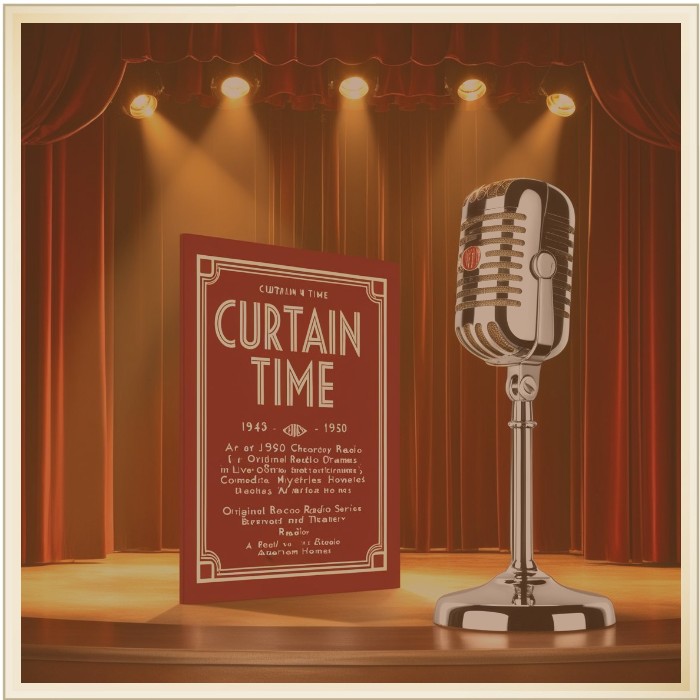
From 1938 to 1950, radio listeners across America experienced that same excitement every week with Curtain Time, one of radio's most beloved dramatic anthology series.
Now available to RUSC members, Curtain Time stands as a shining example of radio's golden age, when imagination ruled the airwaves and entertainment came wrapped in audio elegance. Each episode opened with the familiar sounds of an audience settling into their seats, the rustle of programs, and the distinctive rise of the theater curtain – all creating the perfect atmosphere for the drama about to unfold.
What made Curtain Time special was its commitment to original stories. Unlike many shows that adapted existing works, this series presented fresh tales each week, ranging from heart-warming romances to clever comedies and edge-of-your-seat mysteries. Think of it as having a front-row seat to a different Broadway-quality show every week, all from the comfort of your favorite armchair.
The show's impressive twelve-year run saw it broadcast on every major network of the era – ABC, CBS, Mutual, and NBC – reaching millions of homes across America and even extending into Canada. Starting on July 22, 1938, the series quickly caught the attention of major sponsors, with General Mills' Korn Kix being one of the first to recognize its potential for reaching engaged audiences.
The talent roster reads like a who's who of radio's finest performers. Early episodes featured the remarkable Olan Soule (who would later star in The First Nighter Program), while Harry Elders became the series' reliable leading man in later years. The female leads were equally impressive, with Beverly Younger and Nannette Sergeant bringing charm and depth to their roles. Even a young Mike Wallace – then known as Myron Wallace – lent his distinctive voice as an announcer during the show's run.
What's particularly fascinating about Curtain Time is how it evolved while maintaining its core appeal. Under various directors including Blair Walliser, Norman Felton, and Harry Holcomb, the show constantly refined its approach to radio drama. The music, provided by talented directors like Henry Weber, Porter Heaps, and Burt Farber, became an integral part of the storytelling, enhancing every scene and emotion.
For modern listeners, Curtain Time offers more than just entertainment – it's a time machine to an era when families gathered around their radios for their evening entertainment, when storytelling was an art form, and when imagination painted the most vivid pictures of all. Each episode stands as a testament to the creativity and craftsmanship of radio's golden age.
Here at RUSC, we're proud to offer these theatrical treasures to our members. Whether you're a longtime fan of old-time radio or just discovering its charms, Curtain Time provides the perfect introduction to radio's most creative period. So dim the lights, settle into your favorite chair, and let the curtain rise on some of the finest radio drama ever produced.
Remember, as we say here at RUSC: the golden age of radio never truly ended – it's just waiting for you to tune in again.